Chainsaws at Dawn: The Frozen, Exhausting Art of Competitive Snow Sculpting
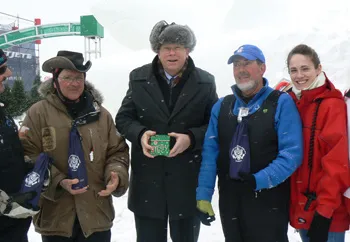
Photo: Unknown authorUnknown author, Public domain, via Wikimedia Commons
The block arrives as a rectangle of packed snow, roughly ten feet tall and heavy enough to make a pickup truck think twice. By the end of the week, it might be a dragon, a wave, a commentary on climate change, or a perfectly smooth geometric form that looks like it landed from another planet. First, someone has to climb it with a chainsaw.
Competitive snow sculpting is one of those winter pursuits that looks whimsical from a distance and feels like a construction site up close. Teams from across the U.S. spend months preparing for events like the U.S. National Snow Sculpting Championship in Lake Geneva, Wisconsin, the International Snow Sculpture Championships in Breckenridge, Colorado, and the St. Paul Winter Carnival in Minnesota. The 2026 winter season will bring another round of teams hauling tools, sketches, and sore shoulders into freezing weather.
The Block Is the Opponent
Sculpting snow is not like carving wood or stone. Snow is fragile, variable, and temporary. A block that is too dry crumbles. A block that is too wet slumps. A warm afternoon can turn a sharp edge into a soft suggestion. A cold night can make the surface brittle enough to shear off in sheets.
Teams learn to read their material the way bakers read dough. They pack it, mist it, shave it, and sometimes just wait for the temperature to change. The best sculptors are not just artists. They are amateur meteorologists with excellent gloves.
Tools of the Trade
A modern snow sculpting team might show up with chainsaws, handsaws, chisels, rasps, trowels, spray bottles, and homemade smoothing tools that look like kitchen gadgets gone rogue. Power tools do the heavy lifting. Hand tools do the detail work. The final pass is often done with bare hands, because gloves are too clumsy for the last delicate edges.
Safety is a real concern. Chainsaws and ice are a bad combination. Teams work in shifts, communicate constantly, and keep the coffee flowing. The goal is not just to avoid injury. It is to avoid the quieter disaster of spending six hours on a detail that collapses in the final hour.
The Weather Is a Judge
Unlike a museum piece, a snow sculpture has a deadline that is not negotiable. It will melt. It might rain. It might get warm enough that the whole competition turns into a race against physics. That impermanence is part of the appeal. Teams know the work is temporary, so they take bigger swings.
That also makes the judging interesting. Sculptures are evaluated on creativity, technique, and overall impact. But judges also see the cracks, the slumps, and the emergency repairs. A team that saves a collapsing arch with twenty minutes to spare has done something the audience may never notice.
Team Chemistry and Sleep Deprivation
Most teams have three or four members, and the event is as much a social experiment as an art project. Someone has to be the planner. Someone has to be the saw operator. Someone has to say, 'That looks wrong,' even when everyone is tired and cold and emotionally attached to a detail that no longer works.
By the final day, the scene is a mix of focus and delirium. Teams are covered in snow. Someone is eating a granola bar with a chisel in their hand. The sculpture is either coming together or falling apart, and the difference can be one degree of temperature.
The Melt Is the Point
When the competition ends, the sculptures stand for a while, then soften, then disappear. Visitors take photos. Judges hand out awards. Teams pack up their tools and promise to do it again next year.
That short life is why competitive snow sculpting feels so oddly moving. It is a niche passion built on skill, teamwork, and the willingness to make something beautiful out of a material that will not last. The block is temporary. The obsession is not.