Yarn Wars: Inside America's Obsession with Competitive Knitting
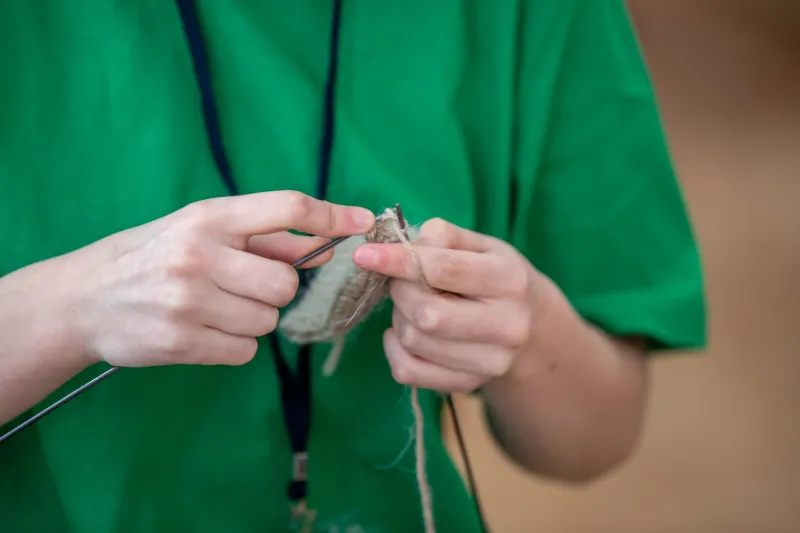
There's a woman in Portland, Oregon, named Dana Kowalczyk who knits so fast her hands blur. At last year's Cascade Fiber Festival speed-knitting heat, she completed a full sock cuff in under four minutes, dropped her needles on the table, and let out a sound somewhere between a war cry and a laugh. The crowd — yes, there was a crowd — went absolutely wild.
If that sounds bizarre to you, you're probably not alone. But spend five minutes on Ravelry, scroll through the #competitiveknitting hashtag on TikTok, or stumble into one of the dozens of regional fiber arts tournaments held across the US every year, and you'll realize something is happening here that nobody really saw coming.
Knitting is having a moment. Not your grandmother's quiet, TV-background kind of moment. A full, loud, streamed-online, trophy-on-the-mantle kind of moment.
From Craft Nights to Championship Rounds
Competitive knitting isn't entirely new — speed challenges and craft contests have existed at state fairs and fiber festivals for decades. But the structure, the seriousness, and the sheer scale of what's happening now is genuinely different.
Events like the Interweave Yarn Fest in Loveland, Colorado, and the Maryland Sheep and Wool Festival have started incorporating timed knitting challenges with actual brackets, judges, and prizes that go well beyond ribbon and bragging rights. Some competitions now offer cash payouts. Others draw sponsorships from yarn companies, needle brands, and even lifestyle companies that have nothing to do with fiber arts at all.
"It's the same adrenaline as any other competition," says Marcus Tillman, a 31-year-old competitive knitter from Nashville who placed second in a national speed-knitting invitational last spring. "People don't believe me when I say that, but your heart is pounding. You're calculating, adjusting, trying not to drop a stitch while someone's literally timing you. It's a sport in every way that matters."
Marcus got into knitting during the pandemic — a story that comes up again and again in this community. Bored, anxious, and stuck at home, he picked up a beginner kit from a local craft store on a whim. Three years later, he's averaging 40 stitches per minute in competition conditions.
The YouTube and TikTok Pipeline
A huge part of what's fueling this wave is the creator economy. Knitting content on YouTube and TikTok has exploded in ways the fiber arts world genuinely wasn't prepared for.
Channels like Sheep and Stitch and VeryPink Knits have racked up millions of views, but a newer wave of creators is specifically leaning into the competitive and personality-driven side of the craft. Think reaction videos to knitting fails, "knit with me" streams that run for hours, and tournament recap content that's edited like sports highlight reels.
One creator, who goes by SpeedStitch on TikTok and has amassed over 800,000 followers, posts timed challenge videos where she tries to complete increasingly complex patterns before a buzzer goes off. Her comment sections look like sports forums — people debating technique, calling out dropped stitches in slow-motion replays, and passionately defending their favorite stitch styles.
"I didn't expect people to care this much," she said in a recent video. "I thought I was just posting stuff for other knitters. But apparently everyone wants to watch someone under pressure trying not to lose their mind over a cable stitch."
That tension — the very real, very relatable pressure of trying to execute a complex physical skill under time constraints — is a big part of the appeal. It's not so different from watching someone speedrun a video game or nail a gymnastics routine. The stakes feel real because the skill is undeniably real.
Why Millennials and Gen Z Actually Care
The demographic shift in the knitting world is maybe the most interesting part of this whole story. Craft industry surveys have consistently shown that the average age of knitters has been dropping for years, and the pandemic accelerated that trend dramatically.
But why knitting specifically? Why not macramé or pottery or any of the other crafts that also saw pandemic-era bumps?
Part of it is the community infrastructure. Ravelry, the social network specifically built for knitters and crocheters, has been around since 2007 and has over 9 million registered users. It functions like a combination of Reddit, Pinterest, and a pattern database — and it gave the knitting world a head start on building online community that a lot of other crafts just didn't have.
But there's also something psychological going on. Younger generations are increasingly drawn to hobbies that produce tangible results in a world that often feels abstract and overwhelming. You knit something, you have something. It's real, it's yours, and if you get competitive about it, there's a measurable outcome. You either finished the sock or you didn't.
"There's a control element to it," explains Dr. Priya Nair, a behavioral psychologist based in Chicago who has written about craft communities and mental health. "In a world where a lot of outcomes feel out of your hands, having a skill where your effort directly determines the result is genuinely comforting. And when you layer competition on top of that, you get community, identity, and purpose all in one package."
Getting Started Without Getting Overwhelmed
If this whole scene is making you want to pick up a pair of needles, the barrier to entry is genuinely low — and the community is surprisingly welcoming for something that has "competitive" in its name.
Most experienced knitters recommend starting with a simple beginner kit (Lion Brand and Clover both make solid starter sets available at most craft stores and on Amazon), picking up a free pattern from Ravelry, and watching a few YouTube tutorials before touching anything more complex than a basic garter stitch.
Local knitting groups — often called "stitch and bitch" circles or yarn crawls — exist in most mid-to-large US cities and are a great way to meet people, get live feedback, and eventually hear about regional events and competitions. A quick search on Meetup.com or Facebook Groups will usually surface something nearby.
For the competitive track specifically, Ravelry hosts a popular annual event called the Ravellenic Games, timed to coincide with the Olympics, where knitters compete in various categories including speed, complexity, and design. It's a great low-stakes entry point into the tournament world.
The Bigger Picture
What's happening with competitive knitting is really a story about what niche communities do when they get the tools to organize, create, and find each other at scale. The internet didn't invent knitting, but it absolutely reinvented who knitting is for and what it can look like.
Dana Kowalczyk — the Portland speed-knitter from the top of this story — puts it simply: "People always laugh when I say I compete. Then I show them a video and they stop laughing. They just start asking questions."
That's the thing about niche passions. Once you see them up close, they're almost never as small as they looked from the outside.