Fingers of Fury: Meet the Teens Solving Rubik's Cubes Faster Than You Can Blink
A Toy, a Timer, and a Whole Lot of Obsession
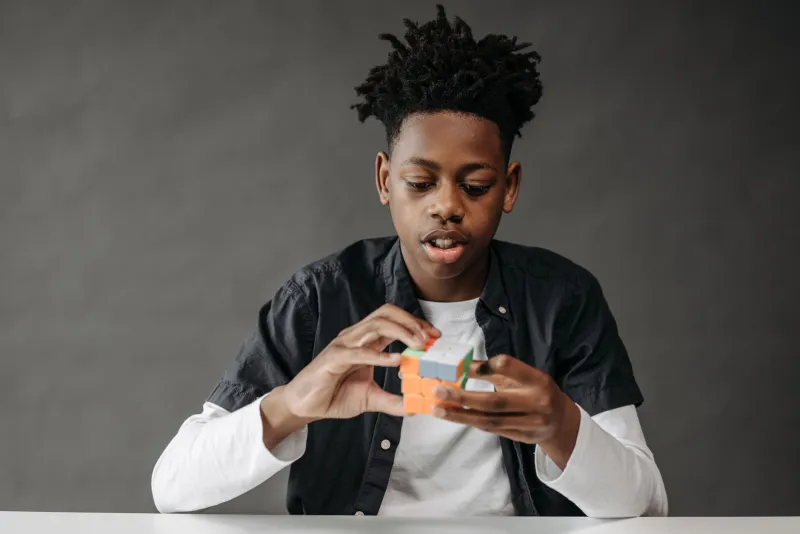
Picture a high school gymnasium in suburban Ohio. The bleachers are packed, phones are up recording, and the crowd is dead silent. A 16-year-old named Marcus presses his palms flat against a regulation mat, hovering over a 3x3 Rubik's Cube scrambled into a configuration that would give most adults a headache just looking at it. A digital timer blinks. He lifts his hands. His fingers become a blur. Four point eight seconds later, every colored face is solved.
The room erupts.
This is speedcubing — and if you've been sleeping on it, you're already behind. What was once a quirky niche hobby has transformed into a full-blown competitive ecosystem, complete with international governing bodies, six-figure sponsorship deals, and a Gen Z generation that has turned a vintage plastic puzzle into something that looks a whole lot like a sport.
From Bedroom Hobby to Sanctioned Competition
The World Cube Association, or WCA, has been officially sanctioning speedcubing competitions since 2003. But the real explosion happened in the 2010s, when YouTube and TikTok gave elite cubers a platform to share their skills with millions of viewers overnight. Suddenly, a kid in Nebraska could watch a world champion's finger techniques in slow motion, reverse-engineer the algorithms, and start training seriously.
Today, the WCA oversees thousands of competitions annually across the globe, including major US events in cities like Dallas, Chicago, and Los Angeles. The North American Championship draws competitors from across the continent, and the World Championship — held every two years — is treated with the same seriousness as any elite athletic event.
The current world record for a single 3x3 solve sits at 3.13 seconds, set by Max Park of California in 2023. Let that number sink in. Three seconds. By the time you register what you're watching, it's already over.
The Science Behind the Speed
Ask a casual observer how someone gets that fast, and they'll shrug and say "practice." Ask a competitive cuber, and you'll get a masterclass in cognitive science, muscle memory, and algorithmic thinking.
Top speedcubers learn hundreds of algorithms — specific sequences of moves that solve particular cube configurations — and drill them until execution is fully automatic. The most advanced method, called CFOP (Cross, F2L, OLL, PLL), involves memorizing upwards of 78 distinct algorithms just for the final layer alone. Some competitors go even further with methods like ZZ or Roux, each with its own deep rabbit hole of theory and technique.
But raw memorization only gets you so far. Elite cubers also train something called "lookahead" — the ability to plan your next moves while your hands are still executing the current ones. It's a form of split-attention processing that takes years to develop, and it's what separates a 10-second solver from a sub-5 competitor.
"Your hands have to be on autopilot," explains Jenna, a 19-year-old ranked in the top 50 in the US. "If you're thinking about the move you're making, you've already lost time. You have to be three steps ahead, always."
Mental preparation plays a surprisingly large role too. Many top competitors describe pre-solve rituals: controlled breathing, visualization, even meditation. The inspection period — competitors get 15 seconds to examine the scramble before touching the cube — is as mentally intense as any pre-shot routine in golf.
The Gear, the Grind, and the Money
If you think all Rubik's Cubes are created equal, speedcubers will politely but firmly set you straight. Competition-grade "speedcubes" from brands like GAN, MoYu, and QiYi bear almost no resemblance to the toy you found in your parents' attic. These are precision-engineered devices with magnetic positioning systems, adjustable tensions, and corner-cutting capabilities that allow pieces to move even when slightly misaligned.
A top-tier competition cube runs anywhere from $30 to $80 — and serious cubers often own dozens, tuned differently for different events. Yes, events plural. WCA competitions include categories for 2x2 all the way up to the monstrous 7x7, plus specialty events like solving blindfolded, solving with one hand, and the fan-favorite Clock event.
Sponsorship money has started flowing into the scene in a real way. GAN, the dominant hardware brand, runs an ambassador program that pays top-ranked cubers for content creation and competition appearances. Some elite competitors have reportedly pulled in sponsorship packages worth tens of thousands of dollars annually, with the biggest names commanding significantly more through YouTube ad revenue, merchandise, and brand deals.
For context, the most-subscribed speedcubing channels on YouTube have audiences in the millions. This isn't a fringe internet corner anymore.
The Community That Makes It All Click
Maybe the most compelling thing about speedcubing isn't the records or the money — it's the community. Walk into any US regional competition and you'll find a strikingly welcoming mix of middle schoolers, college students, and adults in their 30s and 40s, all united by the same obsession. There's very little of the gatekeeping that plagues other competitive scenes.
"When I started, I was terrible," says Derek, a 22-year-old from Atlanta who now competes nationally. "I walked into my first competition with a 45-second average and people were still cheering me on and giving me tips. It doesn't matter where you are — everyone just wants to see you get faster."
Online, the community thrives on Reddit's r/Cubers (over 400,000 members), Discord servers, and a constellation of YouTube channels where cubers break down solves move by move, debate algorithm efficiency, and celebrate each other's personal bests with genuine enthusiasm.
That culture of shared improvement is part of why the scene keeps growing. New cubers aren't intimidated by the elite — they're inspired by them.
Why This Is the Niche Sport Moment You Didn't See Coming
Speedcubing occupies a fascinating space in the current cultural landscape. It's technical enough to reward deep obsessives, visual enough to translate perfectly to short-form video, and accessible enough that anyone can pick up a cube and start the journey. In a media environment that rewards niche passion over broad appeal, it's almost perfectly designed to thrive.
And thrive it has. The WCA's competitor database now lists over 200,000 registered competitors worldwide, with US participation growing year over year. Collegiate speedcubing clubs have popped up at universities across the country. High schools in states like California and Texas have started unofficial cubing teams.
Is it an Olympic sport? Not yet — though the conversation has been had more than once. What it undeniably is, right now, is a legitimate competitive community with real stakes, real athletes, and a real audience that shows up, phones in hand, ready to watch someone do something that looks physically impossible.
Four seconds. Scrambled to solved. And a whole subculture cheering every millisecond of it.