Axes, Alleys, and Obsession: How Axe Throwing Became America's Wildest Night Out
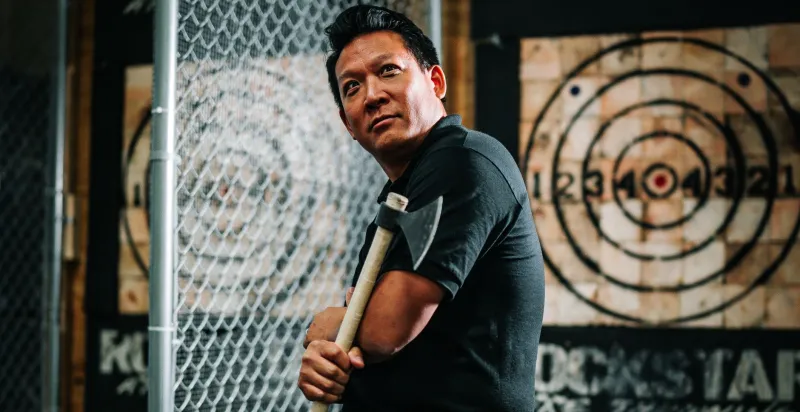
Walk into a World Axe Throwing League venue on a Thursday night in, say, Nashville or Portland, and you might do a double-take. There's a bar. There's a playlist bumping something between indie rock and hip-hop. And there, about fifteen feet from a wooden target bolted to the wall, a 28-year-old in a flannel shirt is releasing a hatchet with the kind of focused intensity you'd normally associate with a surgeon or a chess grandmaster.
This is axe throwing in 2024 — and it is absolutely nothing like you'd expect.
From the Logging Camps to the Strip Mall
The roots of competitive axe throwing go back centuries, deeply embedded in the culture of North American logging communities. Lumberjacks in the Pacific Northwest and Canadian timber camps would throw axes at targets during downtime — part stress relief, part bragging rights. It eventually found its way into formal competitions through organizations like the International Axe Throwing Federation (IATF) and Lumberjack World Championships, where it sat comfortably alongside log rolling and chainsaw carving as a niche sporting tradition.
Then, somewhere around 2016, something shifted. A handful of entrepreneurs — most notably the founders of Backyard Axe Throwing League (BATL) in Toronto — realized that urban millennials and Gen Z adults were starving for experiences that felt tactile, a little dangerous, and deeply shareable on Instagram. Axe throwing checked every single box.
By 2019, the US had hundreds of commercial axe throwing venues. By the early 2020s, that number had exploded into the thousands. Chains like Kick Axe, Bury the Hatchet, and Bad Axe Throwing had spread across major metro areas. The activity had officially crossed over from "quirky thing you did at a cabin" to "legitimate Friday night option."
The Technique Is Harder Than It Looks
Here's what first-timers almost universally discover: axe throwing looks deceptively simple and is genuinely, humblingly difficult.
The core mechanics involve throwing a standard hatchet — typically weighing between 1.5 and 2 pounds — so that it completes exactly one full rotation before the blade sinks into the wooden target. That rotation distance is calibrated to roughly 12-15 feet for a single-handed throw, and the margin for error is almost comically small. A quarter-inch difference in your release point can mean the difference between a bullseye and a loud, embarrassing clank against the lane divider.
Competitors obsess over a constellation of variables: grip pressure, stance width, the angle of the wrist at release, the arc of the arm swing, even the moisture content of the wooden targets (dry wood grips differently than freshly cut timber). Top throwers will tell you that consistency is everything — the ability to reproduce the exact same throw, down to muscle memory, hundreds of times in a row.
"People think it's about strength," says Marcus Delray, a regional competitor based out of Chicago who's been throwing competitively for four years. "It's not. It's more like golf. It's all mechanics and mental game. The second you start muscling it, you lose."
The Leagues Are Real, and They're Serious
The World Axe Throwing League (WATL) and the IATF now sanction competitions across the United States with formalized rulebooks, ranking systems, and prize structures. Weekly leagues run at local venues where participants accumulate points over a season, qualifying for regional and national championships. The WATL's annual World Championship draws competitors from across the US and Canada, with categories for both hatchet and big-axe disciplines.
The community around these leagues is tight-knit in the way that only truly niche sports communities can be. Regulars know each other by throwing style before they know last names. There are inside jokes about specific target boards, heated debates about the merits of different axe brands, and a genuine mentorship culture where veterans coach newcomers with the kind of patience you'd see in a martial arts dojo.
Equipment has evolved alongside the competition scene. Purpose-built competition hatchets from brands like Estwing, Cold Steel, and boutique makers like Gransfors Bruk have replaced the hardware store finds that early enthusiasts used. Handles are now carefully selected for grain orientation and flex. Some serious competitors rotate through multiple axes during a session, matching tool to target condition.
The Venues Are Doing Something Right
It's worth pausing to appreciate just how effectively the commercial axe throwing industry cracked the experience economy code. These venues aren't just sports facilities — they're entertainment destinations. Most offer food and alcohol, make-your-own-league nights, corporate team-building packages, and birthday party bookings. The vibe is somewhere between a bowling alley and a speakeasy, and it works.
For a lot of people, their first axe throwing experience is purely social — a bachelorette party, a work outing, a first date that needed a talking point. But a meaningful percentage of those first-timers get hooked. The feedback loop of throwing, adjusting, and eventually sticking that blade dead center in the bullseye is genuinely addictive in a way that's hard to explain until you've felt it.
Venue operators report that their most loyal regulars often started as casual walk-ins who kept coming back until they were competing in house leagues. It's a grassroots pipeline that has quietly built one of the more passionate participant bases in American recreational sports.
Who's Actually Throwing?
Forget the lumberjack stereotype. The competitive axe throwing community in America skews younger, more urban, and more diverse than outsiders assume. You'll find software developers, nurses, teachers, and graphic designers lining up alongside the flannel-wearing outdoors types. Women make up a substantial and growing portion of both casual participants and serious competitors — a demographic shift that the sport's governing bodies have actively worked to support.
What unites the community isn't a shared background — it's a shared personality type. These are people who love the intersection of physical skill and mental discipline, who are drawn to activities that reward obsessive practice, and who appreciate a community where showing up consistently means something.
"There's no gatekeeping here," says Delray. "If you put in the hours, people respect that. It doesn't matter where you came from or what you do for work."
The Niche That Refuses to Stay Niche
Axe throwing occupies a fascinating position in American recreational culture right now — still weird enough to earn a double-take from the uninitiated, but established enough to have a functioning professional circuit, a robust equipment market, and venues in virtually every major US city. It's the kind of subculture that Nerom was basically built to cover: a passion community that found its people, built its infrastructure, and never really asked for mainstream approval.
Whether it ever cracks into true mainstream sports consciousness almost doesn't matter. The people who are in it aren't waiting for ESPN to validate them. They're just throwing axes, getting better, and quietly building something that feels genuinely their own.