Glue Guns and Glory: The Cutthroat World of Competitive Scrapbooking
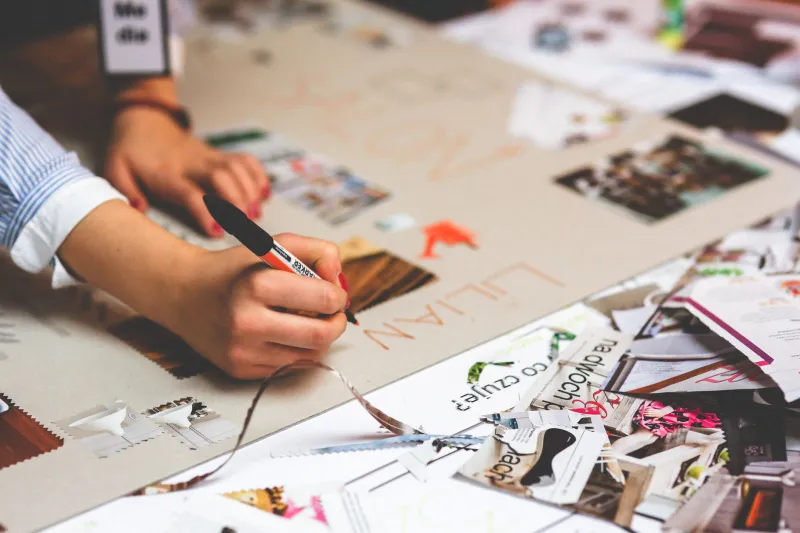
There's a woman in Columbus, Ohio who hasn't slept more than five hours a night for the past three weeks. She's not cramming for the bar exam or launching a startup. She's cutting quarter-inch photo mats with surgical precision, auditing her color theory choices, and stress-testing adhesive layering techniques ahead of a regional scrapbooking championship. Her name is Darlene Kowalski, and she will politely but firmly tell you that what she does is not a hobby. It's a sport.
Welcome to competitive scrapbooking — one of America's most underestimated creative battlegrounds.
More Than Memories on a Page
For most people, scrapbooking conjures images of grandmothers lovingly pasting school photos into pastel-bordered albums. And sure, that version exists. But the competitive circuit operates in an entirely different dimension. Think of it like the difference between shooting hoops in your driveway and playing in the NBA — same basic equipment, completely different stakes.
Regional competitions, often organized through local craft guilds or major retailers like JOANN Fabrics, draw dozens to hundreds of participants who submit original page layouts for judged evaluation. National events — including those hosted through organizations like the Craft and Hobby Association — can attract entries from across the country, with prize packages that include cash, product sponsorships, and coveted industry recognition.
The layouts themselves are judged on a surprisingly rigorous rubric. Composition, color harmony, photo placement, journaling quality, use of embellishments, and overall storytelling cohesion all factor into final scores. Judges — typically seasoned designers or industry professionals — aren't just looking for something pretty. They want a page that communicates a narrative with intentionality. One misaligned element or a font choice that clashes with the emotional tone of a photo can be the difference between first place and an honorable mention.
The Hours Nobody Sees
Ask any competitive scrapbooker what separates a winning layout from a forgettable one, and they'll almost universally point to preparation. Darlene, who has placed in the top three at four consecutive Ohio regional events, estimates she spends between 80 and 120 hours on a single competition piece.
"People see the finished page and think, 'Oh that's cute,'" she says, laughing a little. "They don't see the fourteen mockups I threw in the trash. They don't see me driving forty minutes to three different craft stores because I needed a specific shade of sage green cardstock that wasn't available online fast enough."
That level of dedication is common across the circuit. Competitors research color palettes weeks in advance, study the work of top-ranked scrapbookers the way athletes study game film, and maintain detailed supply inventories that would make a professional graphic designer raise an eyebrow. Many keep sketchbooks specifically for layout ideation, iterating on compositions before a single piece of paper gets cut.
The analog nature of the craft is, paradoxically, what makes it so demanding. There's no Ctrl+Z. A miscut mat, a smeared ink stamp, or a poorly positioned brad can mean starting over entirely — or worse, submitting something you know isn't your best work.
The Convention Circuit and Its Unspoken Hierarchies
Beyond formal competitions, the convention scene is where the community really comes alive. Events like CHA (Craft and Hobby Association) trade shows and dedicated scrapbooking expos held in cities from Atlanta to Portland serve as both marketplaces and social hubs. For competitive crafters, they're also scouting opportunities.
There are unspoken tiers within the community. "Hobbyists" attend to shop and take classes. "Enthusiasts" enter crop challenges — timed scrapbooking events where participants complete a page in a set window, usually one to three hours. And then there are the "circuit regulars," the folks whose names appear on leaderboards across multiple states and who treat every convention as a chance to study the competition.
"You absolutely size people up," admits Marcus Chen, a competitive scrapper from the Pacific Northwest who has been active on the convention circuit for nearly a decade. "Not in a mean way. But you're watching technique. You're noticing what supplies people are reaching for. It's the same thing athletes do — you're always learning."
Marcus is also quick to point out that despite the competitive undercurrent, the community is remarkably welcoming to newcomers. "Nobody's trying to gatekeep," he says. "If anything, people want more folks to get serious about it. More competitors means the wins mean more."
Judging: Where Art Meets Argument
One of the most fascinating — and occasionally contentious — aspects of competitive scrapbooking is the judging process. Unlike sports with objective scoring, scrapbooking evaluations carry an inherent subjectivity that competitors have strong feelings about.
Most sanctioned competitions use a blind judging system, where entries are stripped of identifying information before evaluation. Panels typically consist of three or more judges who score independently before comparing notes. Discrepancies are discussed, and in some cases, a head judge has final arbitration authority.
Still, controversy happens. Forum threads on sites like Two Peas in a Bucket (a legendary online hub for the scrapbooking community) have hosted passionate debates about judging consistency, regional bias, and whether certain aesthetic trends — minimalist layouts versus maximalist "mixed media" styles — receive unfair preferential treatment in different parts of the country.
"The judging criteria are supposed to be style-neutral," says one anonymous competitor who requested not to be named. "But when every winner at a particular event leans toward a certain aesthetic, people notice. We're human. We talk about it."
Why This Niche Has Staying Power
In an era where digital photo albums and Instagram grids have largely replaced physical memory-keeping for mainstream consumers, competitive scrapbooking's continued vitality says something interesting about the enduring appeal of tactile, analog craft.
For its practitioners, the physical act of creating — the smell of adhesive, the texture of specialty paper, the satisfying click of a hole punch — is irreplaceable. And the community that forms around shared passion for that physical process is tight in a way that's genuinely hard to replicate online.
Darlene puts it simply: "I have friends in this community I've known for fifteen years. We've been to each other's weddings. We've helped each other through hard stuff. The competition is real, but so is the connection."
That combination — fierce creative competition wrapped in genuine human community — is exactly the kind of niche that thrives when it finds the right stage. Competitive scrapbooking has been doing it quietly for decades. It just hasn't been asking for your attention.
Maybe it's time to give it some anyway.