Puck Serious: How Air Hockey Went from Arcade Relic to Cutthroat Sport
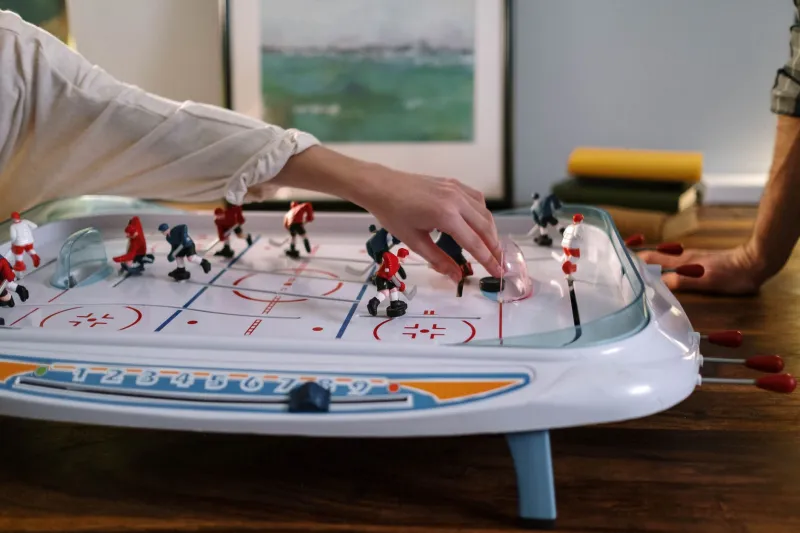
Walk into the right tournament hall on a Saturday afternoon and you'll hear it before you see it — that sharp, rhythmic clacking of a puck ricocheting off rails at speeds topping 80 miles per hour. The sound is almost violent. The players hunched over the tables look anything but casual. Welcome to competitive air hockey, a world that most Americans don't know exists and that its devotees wouldn't trade for anything.
This isn't your cousin's basement game. This is a subculture with its own legends, its own language, and its own deeply held arguments about the right way to cut a bank shot.
From Mall Staple to Serious Pursuit
Air hockey has been around since the early 1970s, born out of a Brunswick Billiards research project and quickly colonized by arcades and family entertainment centers across the country. For decades it lived comfortably in that in-between space — more exciting than foosball, less intimidating than pool — drawing quarters from bored teenagers and competitive dads alike.
But somewhere along the way, a subset of players stopped feeding coins and started taking notes.
The Air Hockey Players Association, better known as the AHPA, has been organizing sanctioned play since the 1970s, making it one of the older niche sports governing bodies in the US. Today, regional tournaments run through cities like Houston, Dallas, and Las Vegas, with the World Championship drawing competitors from multiple countries. The prize money won't make anyone a millionaire, but the competition? That's as real as it gets.
The Equipment Rabbit Hole
Ask a serious air hockey player about their table setup and prepare to lose an hour of your life. The rabbit hole goes deep.
Tournament-grade tables — the kind used in sanctioned AHPA events — are a far cry from the wobbly units you'll find at Dave & Buster's. Brands like Dynamo and Gold Standard Games produce tables with precisely calibrated airflow systems, ultra-smooth playing surfaces, and rail geometry that actually matters when you're trying to execute a two-wall bank shot under pressure.
Some dedicated players drop thousands of dollars on home setups, not just for practice but to dial in the exact feel they prefer. Mallets — called "strikers" in the community — come in different weights, shapes, and materials. Players obsess over them the way golfers obsess over club flex. There are online forums where heated debates about mallet grip styles stretch across dozens of pages.
"People think it's just slapping a puck around," says one Midwest regional finalist who asked not to be named because, as he put it, his coworkers already give him enough grief about his hobby. "But there's geometry involved, there's reaction time, there's reading your opponent. It's chess on a cushion of air."
The Mental Game Nobody Talks About
What separates recreational players from tournament competitors isn't just reflexes — it's psychological control. The puck moves fast enough that conscious decision-making almost can't keep up. Top players train themselves to operate on pattern recognition and muscle memory, which means drilling the same shots hundreds of times until the body just knows.
Defensive play is its own art form. Elite defenders can "cut" the table — positioning their striker to eliminate angles and funnel an opponent into predictable shots. It's frustrating to play against and beautiful to watch, if you know what you're seeing.
There's also the mental chess of reading a specific opponent. Does this person always go for the cut shot when they're on the left side? Do they panic and rush when the score is close? Tournament veterans keep mental files on regulars, tracking tendencies across years of competition.
A Community That Runs on Passion
Sponsorship in competitive air hockey is modest by mainstream sports standards, but it exists. Equipment manufacturers and a handful of regional businesses have backed tournaments and individual players. Some top competitors have built small followings on YouTube and social media, posting tutorial videos and match breakdowns that attract both casual fans and aspiring players.
The community skews heavily toward word-of-mouth recruitment. Someone discovers a local tournament, gets hooked, and starts dragging friends along. Clubs form around shared practice tables. Discord servers buzz with strategy talk and event announcements. It's the kind of organic growth that characterizes the best niche sports — not manufactured hype, just genuine enthusiasm spreading person to person.
Age diversity is one of the more striking things about the competitive scene. You'll find players in their sixties who have been competing since the Carter administration squaring off against twenty-somethings who picked up the game during pandemic lockdowns and found they couldn't put it down.
Why It Hits Different
There's something almost poetic about air hockey's competitive revival. It's a game most Americans associate with childhood — sticky arcade carpets, tokens, the smell of pizza. Reclaiming it as a serious pursuit feels like a small act of defiance against the idea that certain things are just for kids, or just for fun, and can't be both.
The players in this world aren't trying to convince anyone that air hockey belongs on ESPN. They're not chasing mainstream validation. They've found something that challenges them, connects them to a community, and rewards genuine dedication. In a media landscape saturated with manufactured drama and influencer noise, there's something refreshing about a group of people who just want to get really, really good at something specific.
The puck doesn't care about your follower count. It just moves fast, and either you're ready or you're not.
If you've ever written air hockey off as a thing you did at birthday parties, it might be time to reconsider. There's a whole world humming just below the surface — and it's moving at 80 miles per hour.